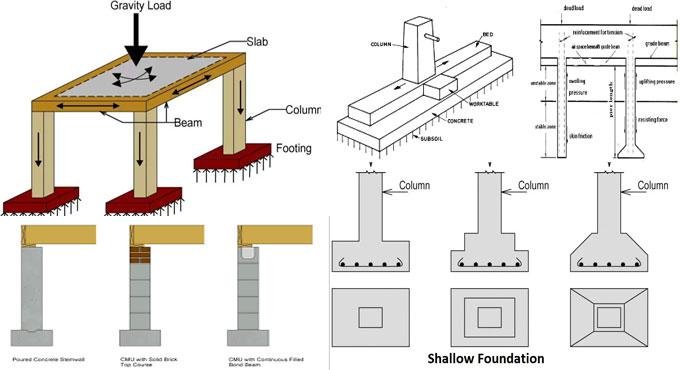
The foundation is the most critical component of any structure. It acts as the backbone of a building, transferring the load from the structure to the ground. Without a properly constructed foundation, even the most well-designed buildings are at risk of structural failure. In this blog, we’ll explore what foundation and structural support systems are, why they’re important, and how they vary depending on soil conditions, building type, and location.
What Is a Building Foundation?
A building foundation is the lowest part of a structure, typically built below ground level. Its main purpose is to anchor the building and distribute its weight evenly across the soil or bedrock beneath. The type of foundation required depends on several factors including the building’s size, use, and the soil’s ability to bear weight.
Types of Foundations
-
Shallow Foundations: These include slab-on-grade, mat-slab, and spread footings. Ideal for smaller buildings and stable soil conditions.
-
Deep Foundations: Pile foundations and caissons are used when the soil near the surface cannot support the load. They transfer loads to deeper, more stable soil or rock layers.
The Role of Structural Support
While the foundation distributes the load to the ground, structural supports within the building ensure stability and integrity throughout the entire structure. These include:
-
Beams: Horizontal elements that distribute weight across columns or walls.
-
Columns: Vertical elements that transfer loads to the foundation.
-
Load-bearing Walls: Walls that carry and transfer loads from the roof and upper floors down to the foundation.
Why Proper Foundation and Support Matter
Improper foundation design can lead to issues like cracking walls, uneven flooring, or even full structural collapse. Investing in a strong and well-engineered foundation and support system ensures:
-
Longevity of the structure
-
Protection from moisture and ground movement
-
Resistance to seismic activity and other environmental stresses
Common Foundation Problems
Over time, buildings may experience foundation problems due to water damage, soil shifting, poor construction practices, or tree root invasion. Warning signs include:
-
Cracks in walls or ceilings
-
Doors and windows that don’t close properly
-
Sloping floors or gaps around window frames
Choosing the Right Foundation
Before starting construction, a soil test (geotechnical investigation) is essential to determine the type of soil and its load-bearing capacity. Based on the results, engineers can decide whether a shallow or deep foundation is appropriate.
Conclusion
A strong foundation and solid structural support system are non-negotiable when it comes to building safety. Whether you’re constructing a residential home, commercial facility, or industrial plant, it’s crucial to work with qualified engineers and contractors who understand the local soil conditions, climate, and structural needs. Remember, a building is only as strong as its foundation.